
Could dementia be detected from the skin? Nsrein Ali’s discovery led to an invention that could make diagnosis easier and more reliable
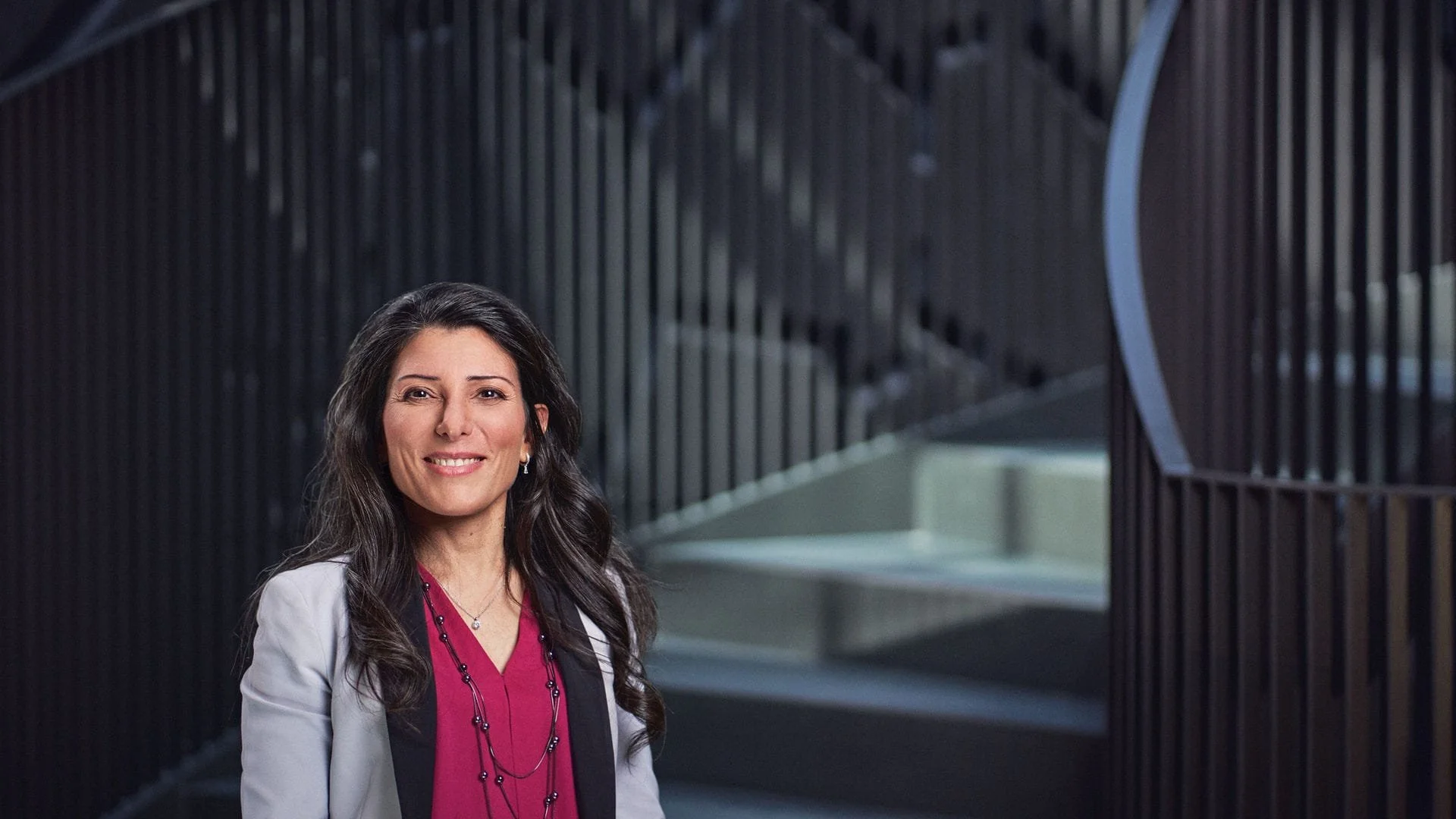
Researcher Nsrein Ali and her team are developing a new type of diagnostic platform for dementia in their DermaEXO project.
Sometimes the most significant innovations emerge when one stops to consider an entirely new direction. This also happened to University of Oulu researcher Nsrein Ali, who wanted to develop her career toward establishing her own research group. At the same time, she also became interested in exploring a new research area: the connection between skin and dementia. These ideas became the starting point for the DermaEXO project, which is developing a new type of diagnostic platform for dementia.
“The DermaEXO project began when I started studying skin samples from mice with dementia. Compared to healthy mice, I observed changes in skin biomarkers and also differences between sexes, as female mice showed a higher risk of developing the disease”, Ali explains. “That led to an idea: could dementia be diagnosed by examining skin biomarkers?”
First steps from idea to implementation: PoC funding and developing business understanding
A biomarker refers to a biological sign that indicates something about a person’s health or disease. It is a measurable value in the body that increases or decreases depending on what is happening in the body. A biomarker can be, for example, a value measured in a blood test, such as blood glucose, or the presence of a specific protein in the body.
When Ali noticed certain changes in the skin of mice with dementia, she submitted an invention disclosure and began discussing how to further develop the invention with experts at the Innovation Centre. In 2024, she decided to establish her own research group around the topic, and their studies confirmed Ali’s observations. This was a good time to apply for Proof of Concept funding for the project, which supports the commercialization of research and the creation of the first implementation of a new innovation. The PoC funding was granted, and the research was able to move forward.
“Maarit and Markku from the Innovation Centre also believed in the project, so applying for PoC funding was a relatively straightforward process. However, I began to think about where I could find funding for my own salary as well, since PoC funding did not cover that”, Ali recalls. “I realised that in order to apply for funding such as Business Finland’s Research to Business (R2B), I needed to strengthen my business skills.”
Ali decided to participate in the Oyster incubator, which is aimed at start-up companies as well as researchers, students and professionals interested in developing innovations for the healthcare sectors. Ali says this turned out to be one of the best decisions during the project.
“In the Oyster incubator, we received intensive coaching on defining the business problem, clarifying the customer value and pitching, among other things. It helped us shape promising research results into a business idea. I warmly recommend Oyster to anyone who wants to develop new health sector solutions.”
Toward commercialization with R2B funding
By the end of 2024, the DermaEXO team had grown to ten members and included both research and business experts. The team was ready to apply for Business Finland’s Research to Business funding, and they submitted their first application in spring 2025. The funding was not granted at that time, but the feedback they received was valuable.
“Based on the feedback, I realised that our application was still too research-focused and needed a stronger business perspective. I decided that my next application would be perfect”, Ali laughs. “So, I wrote a new application while keeping the feedback next to the text the whole time and responded thoroughly to every question that had previously remained unanswered. I had a really good feeling about the application when I finally submitted it.”
After a successful pitching round and a couple of months of waiting, Ali finally received the call she had been hoping for in December 2025: her application had been accepted, and the project would receive a total of €765,522 in funding. By this stage, the project’s first patent application had also been approved, allowing the team to continue development work in January 2026.
“I was so happy!” Ali recalls with a smile. “This project and the R2B funding gave my entire career a new direction and taught me a great deal.”
“Nothing is impossible when you have motivation, determination, commitment and talented people around you”
Looking back on the long and eventful process, Ali highlights the importance of trust and collaboration as the most important lessons – you don’t have to do everything alone. For example, the Oyster incubator and the support of the team have been central on the journey from idea to innovation.
“In a team, you have to trust each other, because you cannot control everything or know everything yourself. Nothing is impossible when you have motivation, determination, commitment and talented people around you”, Ali concludes.
Ali’s expectations for the DermaEXO project are high precisely because of the excellent team.
“I believe that through this project, dementia could in the future be diagnosed at an earlier stage, more easily and more reliably. We have an excellent team consisting of both research and business experts, so the work we are doing will certainly produce results!”
Do you have a project that could have the potential to become a commercial innovation? Are you interested in Business Finland’s R2B funding? The new official funding call will open in May 2026, but you should already now contact the experts at the Innovation Centre, who can help for example with refining your idea, identifying business potential and answering other questions related to the application. Read the application guidelines and get in touch:
Markku Känsäkoski: markku.kansakoski@oulu.fi
Janne Haverinen: janne.haverinen@oulu.fi