
A University of Oulu innovation targets a billion-euro market by helping industry clean water and recover valuable metals
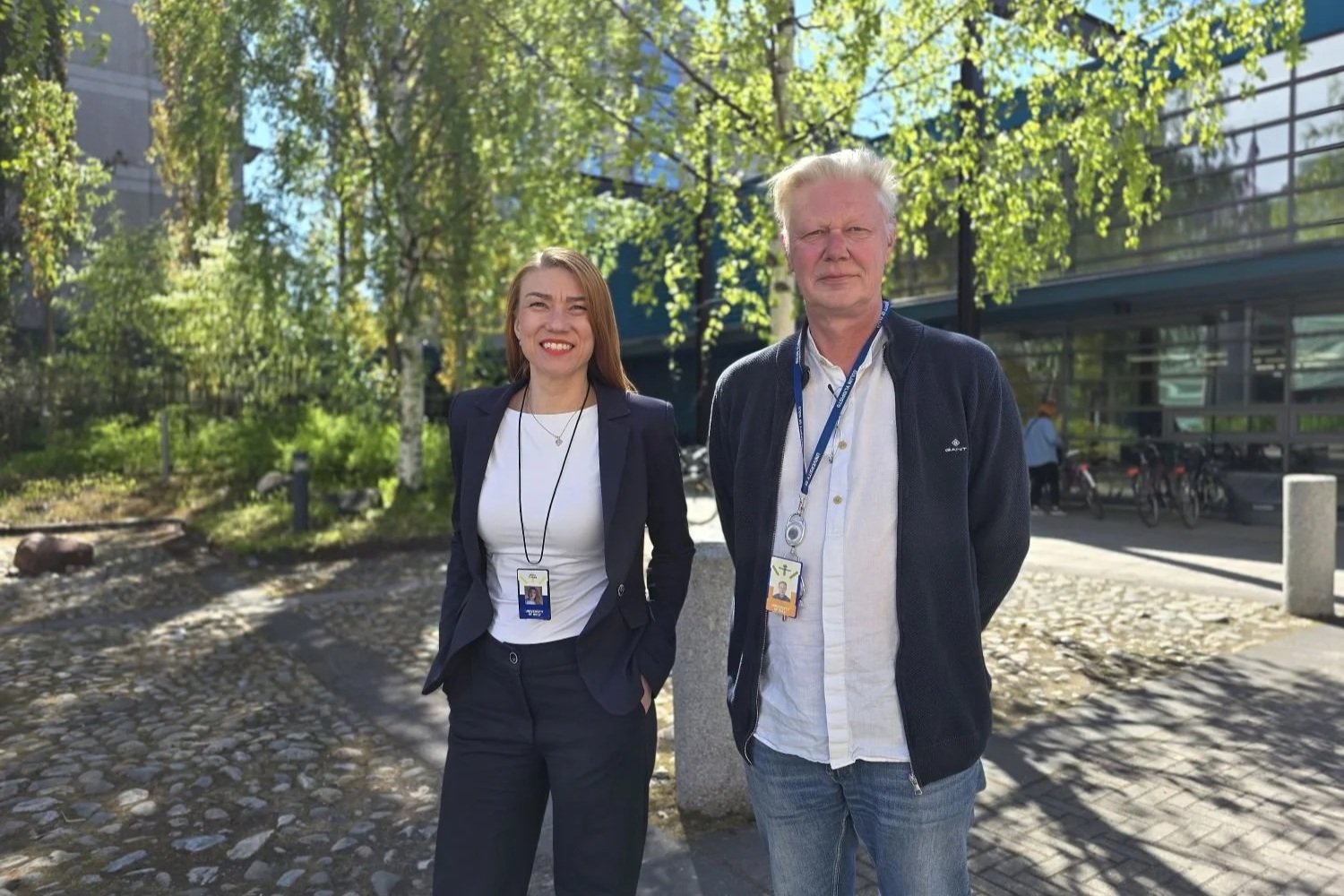
Minna Törmälä and Arto Pikkarainen are advancing the CAAMA water purification and metal recovery method towards new industrial pilots and commercialization.
Industry spends billions of euros every year on water purification and the treatment of metal-containing wastewater. At the same time, valuable metals are lost as they end up in wastewater streams. The CAAMA technology developed at the University of Oulu aims to change this by enabling the cost-effective removal of harmful metals from industrial wastewater while recovering them for reuse instead of allowing them to go to waste. The technology is now advancing toward new industrial pilots and commercialization.
CAAMA (Column-Casted Alkali-Activated Material Adsorbent) is a water purification and metal recovery method developed by chemist and researcher Arto Pikkarainen. Its goal is to make industrial water treatment not only more environmentally friendly but also economically viable. At the core of the technology is a novel adsorbent material made from environmentally safe and natural raw materials. In several tested industrial waters, the method has achieved up to 95–100 % metal removal and recovery efficiency.
“Our goal is to help industry turn water treatment from a cost into value creation. When valuable dissolved metals can be recovered from water, we are not only talking about environmental benefits but also about new business potential”, says Pikkarainen.
Stricter environmental requirements drive demand for new solutions
Environmental regulations are becoming increasingly stringent. At the same time, the green transition is increasing the demand for critical metals. Companies are actively seeking solutions to reduce environmental impact and improve water treatment efficiency.
CAAMA has attracted interest because it simultaneously addresses several key challenges in industry: tightening environmental regulation, growing demand for critical raw materials, and the need for improved resource efficiency. The technology enables water purification and metal recovery within a single process, which can transform wastewater streams from a liability into a valuable resource.
“We have had extensive discussions with mining companies and metal processors. We are now focused on understanding real customer needs, validating the business potential of the solution, and building a path toward market adoption”, says Minna Törmälä, who works on the project as a commercialization expert.
From laboratory to industrial pilots
The technology has been validated with several industrial waters and successfully piloted at a Finnish mine. During the summer of 2026, a new industrial pilot will be carried out to demonstrate the solution’s functionality, reliability, and cost-efficiency in real operating conditions. The pilot unit has been built into a six-metre shipping container, which functions as a mobile water treatment unit.
“The industrial pilot is an important step for us. It provides valuable data on the technology’s performance, customer needs, and helps us build the foundation for future collaboration”, says Pikkarainen.
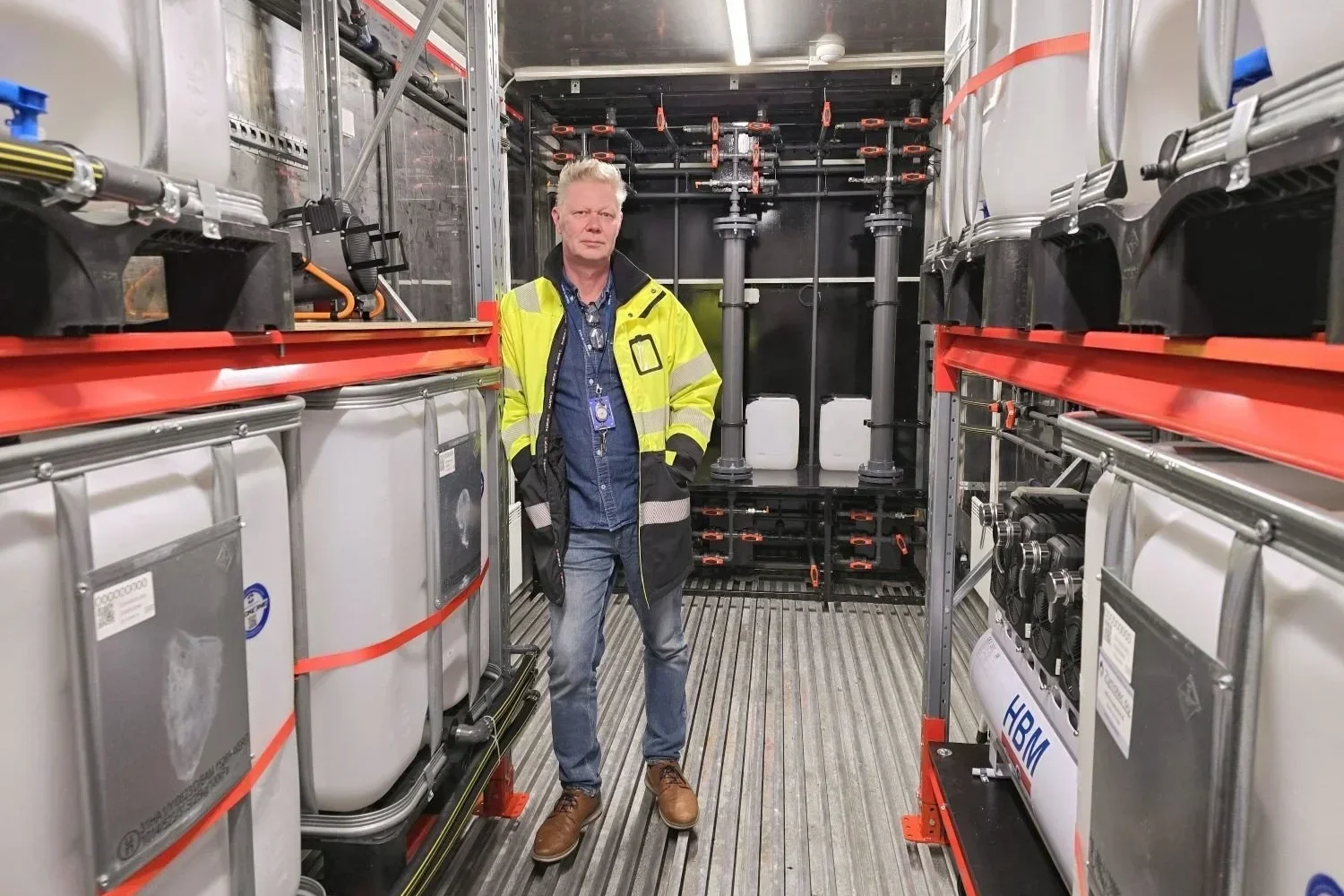
The pilot unit has been built into a six-metre shipping container, which functions as a mobile water treatment unit.
EriCa Reactor accelerator opens doors to international markets and networks
A significant step in the commercialization of the technology was the project’s selection for the EriCa Reactor accelerator programme, whose first cohort focuses on clean water solutions. The programme aims to accelerate the scaling of sustainable innovations from laboratories to markets through collaboration and partnerships. Through the programme, the CAAMA team gains access to international networks, market expertise, investors, and industry experts.
“We are extremely pleased with the selection. Only two projects from Finland were chosen. Strong networks and the right partners are crucial at this stage when the goal is to build a globally scalable business. Through the programme, we have gained many valuable contacts”, Pikkarainen says.
The programme’s main partner is Kemira, which supports participating teams by offering mentoring, coaching, and insights into business growth and success in global markets.
“Kemira is committed to the EriCa Reactor programme because global sustainability challenges – such as climate change, water scarcity, and the responsible use of natural resources – are too complex for any single actor to solve alone. Overcoming these challenges requires new, innovative solutions and close collaboration between different stakeholders”, says Tuomas Mehtiö, who works in new technology and innovation research at Kemira. “The solution developed in the CAAMA project has significant potential in wastewater purification and metal recovery. During the EriCa Reactor programme, the aim is to jointly assess and develop opportunities to scale up pilot activities toward industrial-scale solutions.”
The programme is implemented in practice by Crazy Town. According to Crazy Town expert Toni Pienonen, projects like CAAMA are increasingly needed:
“Too few research results in Finland are translated into practical solutions that improve the world through commercialization. Researchers like Arto, who take steps toward deep tech entrepreneurship, deserve all possible support and encouragement”, he says. “Deep tech teams need commercial expertise early on – business professionals who bring customer understanding and sales capabilities. At Crazy Town, we aim to offer a peer environment, as well as ideas, contacts, support, and inspiration,” Pienonen adds.
New expertise to support commercialization
The project’s commercialization is being accelerated by the addition of Minna Törmälä to the team. She has a strong background in commercializing new technologies, business development, and international marketing. Törmälä also holds a doctoral degree in economics and business administration from the University of Oulu, bringing strong commercial expertise to the team.
Törmälä joined the project with the support of LähiTapiola’s Kasvukipinä funding, which aims to promote the creation of research-based companies.
“There is often a gap between research and business where even promising innovations can stall. This type of support is important to ensure that truly impactful innovations find their way to the market and into use”, Törmälä says.
Pikkarainen also highlights the importance of the Innovation Centre in the project’s development:
“The Innovation Centre’s support in building contacts and securing funding has been extremely valuable, especially at the stage where a gap can easily emerge between research and commercialization.”
Toward an international growth company and value from side streams
The goal is to build a growth company around CAAMA that helps industry respond to increasingly stringent environmental regulations while making more efficient use of industrial side streams. At the same time, the technology supports Europe’s efforts to strengthen self-sufficiency in the availability of critical raw materials and to advance the green transition.
While the first applications are in the mining industry, the technology also has potential in the battery, metal, forest, textile, and chemical industries, where wastewater and process water contain metals in dissolved form.
“Clean water is the world’s most important resource. At the same time, there is a growing shortage of critical metals. We have a solution that can address both challenges simultaneously,” Törmälä says.
“In the future, no water stream containing valuable metals should be viewed simply as waste. We envision a world where industrial waters are treated not only for environmental reasons, but because the materials they contain are too valuable to lose”, Pikkarainen emphasizes.
Interested in collaborating?
The CAAMA team is actively seeking pilot customers, industrial partners, and investors to help accelerate the commercialization of the technology.
If you would like to learn more about the technology or explore collaboration opportunities, please contact:
Minna Törmälä
Business Development & Commercialization Lead, University of Oulu minna.m.tormala@oulu.fi
+358 50 367 2091