
“Good science is essential, but not enough” – Tejesvi Mysore turns research into impact through entrepreneurship
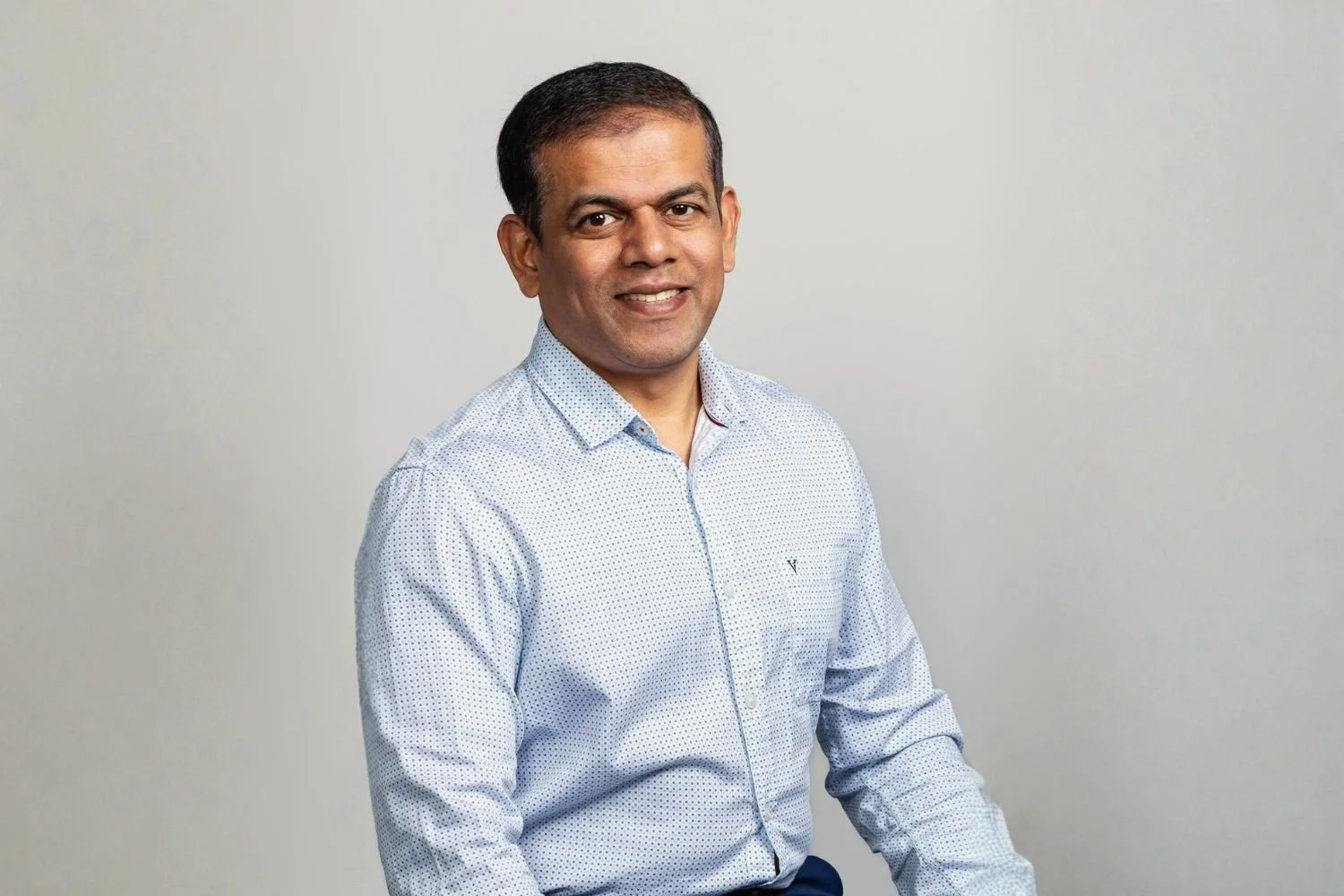
University of Oulu researcher Tejesvi Mysore founded his own business that focuses particularly on chronic wound care.
How does research create an impact? How can research results be turned into business? What happens on the journey from idea to market? And what should researchers keep in mind along the way?
These questions were explored in the InnoWebinar, where University of Oulu researcher and entrepreneur Tejesvi Mysore shared his personal journey from scientist to startup founder. Mysore’s path began in basic research, where metagenomics was used to identify compounds found in nature. By analyzing compounds extracted, for example, from crowberry, antimicrobial peptides were identified and further developed to become more stable and effective than earlier versions.
For Mysore, the transition into entrepreneurship was the result of several factors coming together: the research had produced protected technology, there was a clear market need – particularly in combating antibiotic resistance – and academic funding alone was not sufficient to bring the solution into clinical use.
“Science is the foundation of everything. Good science is essential, but not enough”, Mysore notes. Real impact is created only when it is combined with market understanding, funding, and commercialisation expertise.
First steps into entrepreneurship: Chain Antimicrobials
In 2017, Mysore founded his first company, Chain Antimicrobials, with the goal of preventing infections, for example through antimicrobial coatings for catheters. In the early stages, the business progressed well: the technology had been validated, patents were in place, and funding was secured from both private investors and public sources.
However, the development soon highlighted the realities of health-tech startups: market entry requires extensive clinical trials, and regulatory processes are slow. Securing sustained funding also proved challenging. The expectations of international investors, changes in the market environment, and the impacts of the pandemic made it difficult to move forward, and eventually Chain Antimicrobials ceased operations.
The end of the company did not, however, stop the development work. Mysore reacquired the patents previously held by the company and transferred the work into a new venture.
A new beginning and mindset: ChainPeptides
In 2022, ChainPeptides was founded, shifting the focus toward wound care – particularly chronic wounds such as diabetic foot ulcers. The new solution combines antimicrobial agents with biosensor technology. The result is an intelligent wound care material that continuously monitors the condition of the wound and responds to early signs of infection by releasing antimicrobial compounds in a targeted way.
The underlying research is the same as in the previous company, but the application and market have been redefined. This reflects a core principle of the startup world: direction can (and should) be adjusted if it leads to a more viable solution.
Along the journey, Mysore also came to understand the difference between the mindsets of a researcher and an entrepreneur. In research, long-term thinking is essential, as well as ensuring that solutions are reliable and scientifically sound. In business, however, the ability to move forward amid uncertainty and to test solutions in practice becomes central. In a startup environment, rapid learning is more important than striving for perfection. Solutions are developed iteratively and at pace: testing, learning, and improving. The measures of success also differ. In research, scientific validation is key, whereas in business, finding a functioning market is decisive.
From research to business – lessons learned
Mysore’s experiences highlight several practical takeaways:
Understand the customer's need: A technological solution alone is not enough if it does not address the actual problems of users or customers. For Mysore, early conversations with clinicians and patients were essential.
Invest in intellectual property early: Patents are often a key factor in securing funding and enabling collaboration. They protect the solution and influence where and how the technology can be developed and commercialised.
Build a capable team: In addition to scientific expertise, business, regulatory, and commercialisation skills are needed.
Prepare for continuous funding needs: Funding plays a critical role throughout the journey. A startup is not a one-off project, but an ongoing process where securing the next phase of funding must always be anticipated in advance.
Mysore also notes that research-based entrepreneurship opens up new career paths, while still leaving the possibility to return to academia later on.
He emphasizes that entrepreneurship based on research is not a linear path. It involves uncertainty, challenges, and changes in direction, requiring persistence and courage. At the same time, he highlights that building a company is worthwhile, as it offers an opportunity to bring research into practice and address significant societal challenges.
Interested in commercialising research results?
The Oulu University Innovation Centre supports researchers in commercialisation, intellectual property matters, funding applications, and building collaboration networks.
Get in touch:
Janne Haverinen: +358294488055, janne.haverinen(at)oulu.fi
Markku Känsäkoski +358294487506, markku.kansakoski(at)oulu.fi